Introduction to Kubernetes ReplicaSet
In kubernetes, a ReplicaSet is a controller whose purpose is to maintain a stable set of replica pods running at any given time.
Imagine you have a pod that needs to run multiple copies of itself in order to handle a high volume of requests. You can create a ReplicaSet object in Kubernetes that specifies how many replicas (copies) of the pod should be running at all times.
If a pod fails or is deleted for some reason, the ReplicaSet will automatically create a new pod to replace it, ensuring that the desired number of replicas is always maintained. This helps to ensure that your application is always available and responsive to incoming requests.
Overall, a ReplicaSet is an important tool for managing and scaling containerized applications in Kubernetes.
ReplicaSet uses labels to match the pods that it will manage.
ReplicaSet Overview
Here's a GIF showing how a ReplicaSet maintains a stable set of replica pods:
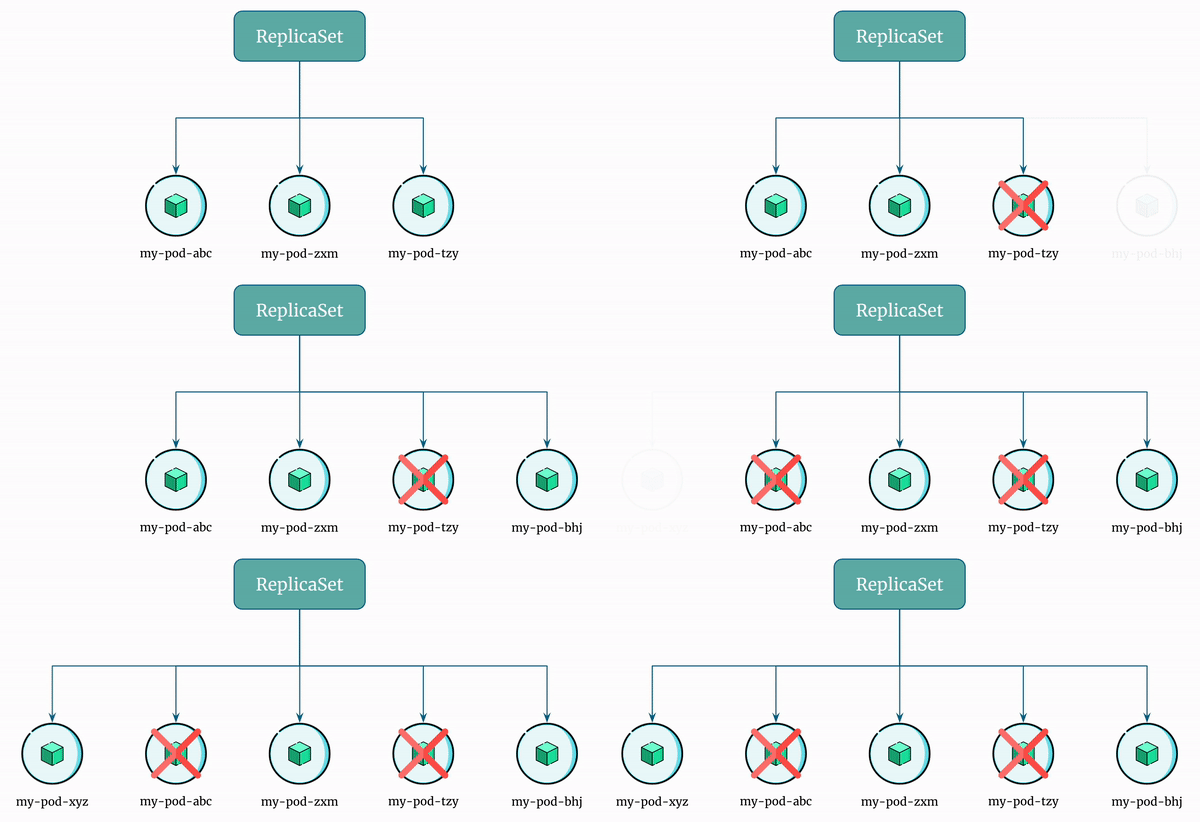
- The
ReplicaSetmanages a pod with a replica count of 3. - For some reason, the pod
my-pod-tzyceases to function. - The ReplicaSet detects the pod
my-pod-tzyhas stopped and launches a replica podmy-pod-bhjto ensure that 3 replicas of the pod are always running. my-pod-abcexperiences an unexpected failure, and theReplicaSetonce again detects this issue and deploys a replica podmy-pod-xyzto maintain 3 replicas of the pod.